
Getting a SIM Card and Mobile Contract in Germany: Complete 2026 Guide
⚡ TL;DR
You need a German phone number almost immediately after arriving — it's required for registrations, appointments, and employer contacts. Prepaid SIM cards are the fastest option: buy one at any supermarket or phone shop with just your passport, no bank account or Anmeldung needed. Contracts offer better rates long-term but require a German bank account and are usually 24-month commitments. The three main networks are Telekom (best coverage), Vodafone (good value), and O2 (cheapest unlimited). eSIMs let you activate instantly before even landing.
Why You Need a German Number Before Almost Anything Else
Landing in Germany without a local phone number puts you at an immediate disadvantage. It's not just about convenience — a German mobile number is practically required for booking Bürgeramt appointments, contacting landlords, registering with health insurers, and keeping in touch with employers. Many German services don't communicate by email by default. They call. And they call a German number.
The good news is that getting a SIM card in Germany is straightforward. You don't need a completed Anmeldung, a German bank account, or any special documents beyond a valid passport. A prepaid SIM from a supermarket will have you connected within minutes of purchase [1][2]. This guide explains your options so you can pick the right one for where you are in the arrival process.
Prepaid vs. Contract: Which One Is Right for You?
Prepaid (Prepaid-Karte)
Prepaid is the go-to for almost every newcomer who has just arrived in Germany. There's no credit check, no long-term commitment, and no German bank account required [1][3]. You buy credit upfront and top it up as you go — at supermarkets, kiosks, petrol stations, or via app.
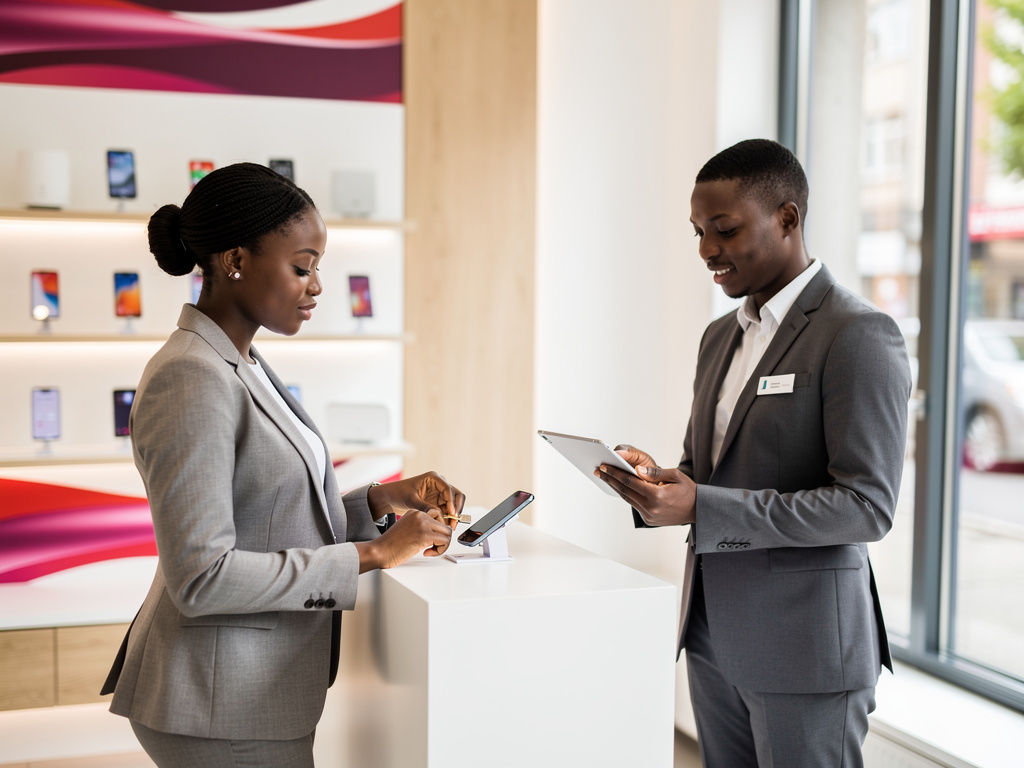
The process is simple: pick up a SIM at a supermarket (Lidl, Aldi, Rewe, dm), a phone shop, or an electronics store like Saturn or MediaMarkt. You'll need to activate it by verifying your identity — either in-store, via video call (Video-ID), or at a post office [4]. Since 2017, all SIM cards in Germany must be registered to a real person with a real address, but shops handle this routinely and a hotel or temporary address will work for prepaid [2].
Prepaid pricing: Monthly costs range from around €5 for basic plans to €25–30 for generous data allowances. Budget-friendly options include Aldi Talk, Lidl Connect, and Lebara — all using one of the big three networks [1][3].
Contract (Vertrag)
A German mobile contract gives you better rates for heavy data users and usually includes the latest phone deals. The tradeoff: most contracts run 24 months, require a German bank account for direct debit, and may involve a credit check [1][5]. They're the right move once you're settled with a bank account and confident about your medium-term plans.
Notice periods: Standard German contracts are cancellable monthly after the initial contract period ends — but you must give one month's notice before the end of each contract year [4]. Don't miss the window or you auto-renew.
The Three Main Networks — and Budget Alternatives
Telekom (T-Mobile)
Germany's most extensive network — best for coverage in rural areas, small towns, and when travelling outside major cities [5][3]. It's the priciest of the three but worth it if you need reliable connectivity everywhere. Prepaid plans start around €10–15/month and go up to full unlimited options.
Vodafone
Good nationwide coverage, strong in urban areas, and competitive on data-heavy plans. A solid middle-ground choice between Telekom's premium coverage and O2's budget pricing [5].
O2
The cheapest of the three major networks for unlimited data, with unlimited plans starting at €29.99/month [5]. Coverage in rural Germany is weaker than Telekom or Vodafone, but for anyone living in a city, it works well.
Budget MVNOs — the best value for new arrivals
Aldi Talk, Lidl Connect, Congstar: These are Mobile Virtual Network Operators (MVNOs) — they use the infrastructure of the big three at lower prices. Aldi Talk and Lidl Connect are among the most popular choices for cost-conscious newcomers and can be bought at any of those supermarkets in minutes [1][3]. Lebara is popular in the African and diaspora community for its international call rates.
What You Need to Buy a SIM Card
Regardless of which type you choose, the requirements since 2017 are:
-
Valid passport or national ID
-
A German address (for prepaid, your hotel or temporary accommodation works fine — shops will often look it up for you) [6][2]
-
An unlocked phone (make sure your device isn't locked to a foreign carrier before you leave home) [5][7]
For a contract, you'll additionally need a German bank account (IBAN) and your Anmeldebestätigung [4]. This is why prepaid is the practical first step: you get connected immediately, then switch to a contract later once everything else is in place.
eSIMs: The Fastest Way to Get Connected
If your phone supports eSIM (most phones made after 2019 do), this is worth serious consideration. An eSIM is a digital SIM — no physical card, no shop visit, activated instantly via QR code [3][7].
You can buy an eSIM online before you even board your flight to Germany. International eSIM providers like Airalo work the moment you land. For a longer-term German number, major providers including Telekom, Vodafone, and O2 all offer eSIM options, though their online registration process takes about 30 minutes for identity verification [2]. Budget providers like Lebara and Aldi Talk also offer eSIMs.
eSIM advantage: You can run two numbers simultaneously — your home country SIM and your German eSIM — on the same phone without needing a physical SIM swap. This is useful in the first weeks when you're still receiving calls on your original number.
Frequently Asked Questions
References
-
Where to Buy a SIM Card in Germany – galvanizetestprep.com (January 2026)
-
Choosing the Best SIM Card in Germany 2026 – liveingermany.de
-
How to Get a Mobile Phone Plan in Germany – onboard-germany.de (November 2025)
-
Best SIM Cards for Expats in Germany 2026 – how-to-germany.com (February 2026)
-
How to Use Your Cell Phone in Germany 2026 – mygermanyvacation.com
Get New Articles Delivered
Be the first to read our latest guides and resources as soon as they're published.